Saturday, December 6, 2025

Between Lines by Cynthia J Giachino

Between LinesBetween Lines by Cynthia J. Giachino
My rating: 5 of 5 stars

A Gripping Mystery Thriller about Friendship, Fraud, and the Fight for Justice...

“Between Lines” by Cynthia J. Giachino is an engaging, socially conscious novel that blends personal narrative, suspense, and education about modern scams and human trafficking into a character-driven story that feels both timely and heartfelt. It reads like a hybrid of contemporary women’s fiction and issue-based thriller, anchored by an emotionally resonant core relationship between writer Irene and the distant, unseen figure of Ricco.

At its center, the book follows Irene, a midlife author whose dream of seeing her book succeed pulls her into a web of predatory publishing and film “opportunities,” leaving her financially and emotionally devastated before she slowly uncovers the scale of the fraud. Her friendship circle—calm, poised Betty and the bold ex-military Stella—becomes the emotional and practical backbone of her attempt to claw her way back, seek justice, and respond to a disturbing intuition that one of the “scammers,” Ricco, may himself be a victim trapped in a cyber-scam labor camp.

Thematically, the book tackles trust, shame, resilience, and identity, as well as the gray space between victim and perpetrator when people are coerced into crime. The narrative opens out from Irene’s living room to an international canvas—London, Southeast Asia, and the Mekong region—exploring pig‑butchering scams, cyber fraud compounds, and forced labor, while still keeping the focus on human relationships and the cost of survival. Book-club questions at the end explicitly foreground themes like good vs evil, courage, friendship, and self‑discovery, underscoring the author’s intention that readers reflect, not just be entertained.

Giachino’s strongest asset is her cast. Irene is written with vulnerability and self‑awareness; she feels ordinary in the best sense—hopeful, lonely, sometimes naïve—and her mix of guilt, humiliation, and determination after losing tens of thousands of dollars is painfully believable. Betty and Stella serve as complementary foils: Betty offers gentle stability and social grace, while Stella storms through scenes with military decisiveness, black leather, service dog Blizzard, and a near-comic refusal to accept arbitrary rules.

On the other side of the screen, Ricco (later revealed as Harris) is a compelling example of moral conflict under duress: a literature‑loving young man pressed into scamming elderly couples and aspiring writers to fund a militia, all while clinging to scraps of humanity through emails, whispered muttering, and a hidden cell phone strapped to his leg. Secondary figures—Maya, Gaffer, Dog, Edge, Ammara, and Maureen—add layers of found family, mentorship, and global perspective, especially once the story shifts toward rescue and extraction. The relationships are often idealized but emotionally satisfying; readers who enjoy loyal “team” dynamics and chosen-family arcs will find a lot to appreciate.

The book is structured in short, cinematic chapters that alternate between Irene’s world and Ricco’s, then expand to include Gaffer’s team and the wider investigative and rescue effort. This back‑and‑forth keeps the pace brisk: domestic scenes of email sorting, coffee, and card games are intercut with scenes of overheated compounds, guards, and high‑stakes extractions under fire. The voice is accessible and conversational, with frequent dialogue and interior monologue; it often feels like listening to a friend recount an extraordinary experience rather than reading a detached thriller.

Stylistically, the prose leans more toward clarity than literary experimentation. Expository passages where characters explain concepts like pig-butchering scams, cryptocurrency laundering, and cyber camps are direct and didactic, reflecting the author’s background in education and her desire to inform. At times this instructional impulse slightly slows the narrative or makes subtext explicit (for example, explaining trauma responses or global fraud figures in dialogue), but for readers new to these topics, it adds real value and context.

Where “Between Lines” succeeds most is in translating abstract headlines—scams, cryptocurrency fraud, trafficking—into lived experience and emotional stakes. Irene’s unease at being "pig butchered," her challenges in trusting her intuition, and her dependence on peer validation reflect the sentiments of several scam victims, invoking empathy rather than disdain. Ricco's chapters show how educated, well-meaning young adults can be duped into abroad "jobs," only to wake up in camps where every email is a crime and a plea for survival.

The novel also offers a hopeful throughline: friendship, intergenerational support, and international cooperation can produce real change, even if imperfect and risky. By the time the narrative reaches rescue, reunion in London, and tentative new beginnings—therapy, new work at archives, Amber’s return to pediatric nursing—the book has earned its optimism without denying ongoing trauma.

“Between Lines” will particularly appeal to readers who enjoy contemporary, character‑driven fiction with strong female friendships and a clear moral compass. Book clubs interested in discussing scams, digital trust, human trafficking, and midlife reinvention; the included discussion questions are thoughtful and ready-made for group use. Also, readers who enjoy narratives in which ordinary people confront global concerns while focusing on relationships, healing, and human behavior rather than procedural complexities will not be disappointed.

This is a compelling and accessible novel that intertwines suspense with empathy, and education with storytelling, leaving readers both informed and emotionally touched by the real human repercussions of modern internet fraud. Highly recommended.

View all my reviews
Friday, November 21, 2025

One Man Down: A Novel by Alex Pearl

One Man Down: A NovelOne Man Down: A Novel by Alex Pearl
My rating: 5 of 5 stars

A Razor-Sharp Nostalgic Romp Through '80s London...

If you've ever fantasized about 1980s London advertising—those three-martini Soho lunches, briefs scrawled on cocktail napkins, pitches that could launch or sink entire careers—Alex Pearl's One Man Down will take you there. Pearl lived it, and he's turned that chaos into something sharp and alive: part Mad Men, part British murder mystery, with enough cricket-pitch weirdness to keep you grinning. I started it laughing over coffee and ended up reading past midnight, caught between the jokes and the genuine suspense.

The story follows a band of misfit copywriters navigating cutthroat client pitches, office backstabbing, and the clatter of typewriters in that last gasp before everything went digital. When a hotshot executive takes a fatal fall, things spiral—blackmail, corporate schemes, red herrings everywhere. Our heroes, two quick-witted copywriters with questionable ethics, stumble into solving it not as detectives but as confused bystanders, connecting dots between boozy brainstorms and celebrity cameos. Pearl skewers the era's excess—the decadent nights, the ego worship, work bleeding into play—but he never loses his affection for the madness.

What makes this book sing is Pearl's voice: vivid, unpretentious, loaded with puns that hit like great ad copy. "The bland leading the bland," Shakespearean writers "getting bard-ons"—I actually laughed out loud, which doesn't happen often. But underneath the humor sits real insight into human absurdity: ambition's cost, the rush of deception, those moments when you recognize someone from your own life. The pacing moves, the twists surprise (one midway reveal genuinely floored me), and the '80s details feel lived-in—ice clinking in glasses, smoke hanging in boardrooms, that electric sense of being on the edge of something new.

It's not perfect. The sprawling cast might trip up readers who like their mysteries tidy, and the cricket stuff, while smart, can slow things down if you're not into the sport. But these are small complaints for a book this full of life. Pearl doesn't just entertain—he conjures a lost world so vividly you can almost feel the shoulder pads.

In a crowd of forgettable thrillers, One Man Down is the real thing: funny, quick, sharply observed. If you want a page-turner that's also a love letter to London's wild side, this is it. Absolutely worth your time, and I'll be waiting for whatever Pearl writes next. Perfect for anyone who's chased a deadline, dodged disaster, or just needed a damn good laugh. Highly recommended.

View all my reviews
Thursday, November 20, 2025

Coming 2 America by Dr John Ayoola Akinyemi

Coming 2 AmericaComing 2 America by Dr. John Ayoola Akinyemi
My rating: 5 of 5 stars

The American Dream, Unpolished and Real...

Most memoirs these days feel a little too perfect. All polished edges and careful curation. But Dr. John Ayoola Akinyemi's Coming 2 America: This is a Story about a Fifteen-Year-Old African Girl lands differently—like finding a handwritten letter tucked in your mailbox, still warm with feeling. This slim 88-page tribute to his late wife Agnes isn't just her story. It's a love letter—to resilience, to faith, to the difficult, beautiful reality of the American Dream.

Agnes Ndungwa Akinyemi was a Kikamba girl from Kenya's Kangundo District who boarded a plane to America at fifteen. What unfolds isn't some glossy rags-to-riches tale. It's quieter than that, more real. Through her husband's tender gaze, we meet the "Rock"—a woman who graduated Madonna High School in Aurora, earned her Master's in Microbiology from Howard, pursued a PhD at UMBC, and spent 24 years as a microbiologist at Aberdeen Proving Ground. But it's the in-between moments that stick with you: the scholarships earned through sheer determination, the loneliness of navigating a foreign country as a young Black woman, the girl mending her own boarding school uniforms who became a federal retiree.

Akinyemi makes it deeply personal. His preface, written with the raw ache of losing Agnes to dementia in June 2021, pulls you right in. He wrestles with the title (From Nobody to Somebody: Only in America felt too close to Eddie Murphy's movie), and suddenly he's not just a biographer—he's a widower sorting through memories, trying to honor the woman whose smile dazzled him. Their origin story is pure magic: 1964, a Syrian classmate mentions "an African girl in town," John makes a phone call, shows up for what was supposed to be five minutes, and stays a lifetime. "From now on, it is 'my' 'story'!" he writes, dropping the 'h' from "history." It's a small flourish, but you feel his heart in it—Yoruba warmth meeting Kikamba pride.

The cultural details really bring this alive. Agnes's Kenyan childhood unfolds in vivid snapshots: colonial-era Machakos Girls School where European teachers lived lavishly while African staff biked in from town. Sunday church marches that left her bewildered. Independence Day rituals of scrubbing floors in yellow linens, Christmas feasts of ischio—that rich mash of corn, beans, and meat. These aren't just pretty memories; they shaped her. She learned empathy young, comforting classmates whose parents didn't show up at school events, introducing them to her own loving family. Akinyemi knows the biographer's curse—"not enough time or space"—but every detail he chooses feels alive and necessary.

If there's a wish here, it's for more pages. At 88, the book moves fast—you could read it in an afternoon—but you're left wanting deeper access to Agnes's interior life after America. We glimpse her NIH work, her doctoral path, but hunger for more. Still, maybe that restraint is the point. This is a love story, after all—not just between John and Agnes over fifty years, but her love for Kenya, for America, for family who gathered at her bedside at the end.

Reading Coming 2 America now, with migration stories swirling everywhere, it feels both urgent and eternal. That old truth: here, a "nobody" can become a "somebody" through grit and grace. It's medicine for anyone who's climbed from the bottom, a reminder that the best lives aren't measured in accolades but in quiet faith—in God, in yourself, in each other.

If you need inspiration served with humility, pick this one up. You'll close it feeling grateful, maybe a little teary, thinking of the rocks in your own life. Five stars. And a quiet amen to stories like Agnes's that make this country shine. Highly recommended.

View all my reviews
Sixty-Two Years Later by Dr. John Ayoola Akinyemi

Sixty-Two Years LaterSixty-Two Years Later by Dr. John Ayoola Akinyemi
My rating: 5 of 5 stars

A Heartfelt Rearview Mirror: Reflections on "Sixty-Two Years Later"...

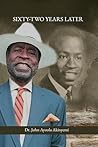
Most memoirs these days feel a little too polished, too neat. But Dr. John Ayoola Akinyemi's Sixty-Two Years Later reads like catching up with an old friend over coffee—the kind who's lived a full life, laughed at the absurdity of it all, and come out the other side with something real to say.

Published in 2025 by The Eagle Literary, this slim book marks 62 years since Akinyemi landed in America at 21, a wide-eyed kid from Nigeria chasing an education in what he calls the "Land of Plenty." Now 83, he's not just telling his story—he's bringing us along, looking back through the rearview mirror while reminding us to appreciate what we've got.

The structure's simple—preface, four parts—but it unfolds like a fireside chat. Part 1 acknowledges America's immigrant soul, grounding us in who was here first. Part 2 gets personal: his journey from a "Land of Empty" to one full of promise, echoing threads from his earlier books Beyond 80 and I Am Scared, VERY SCARED! Part 3 is where it really hits—a meditation on what's changed (goodbye rotary phones, hello $5 gas) and what hasn't (the heart of "We the People"). He mixes humor with heartache: immigrant masons joking about building a "cathedral" while working on the Washington Cathedral, reflections on aging, the wild fact that Obama was a toddler when Akinyemi arrived. Time does that to you.

Part 4 turns tender. He revisits meeting Agnes, an 18-year-old Kenyan student who became his wife, and mourns her loss at 76. It's love stretched across continents and decades, raw and real. Woven through it all is advice for young scientists facing gutted research budgets—drawing from his NIH-funded PhD days, he tells them: innovate, adapt, maybe even look abroad. "Tough times don't last, but tough people do."

What sets this apart is Akinyemi's voice—warm, unpolished, effortlessly human. He's a biologist, a retired Marine vet, not a trained historian, and that's exactly the point. This is storytelling from the gut. Sure, the prose wanders sometimes, full of tangents and exclamation points, but that's him: generous, reflective, alive on the page. The photos at the end—birthdays, cruises, retirement toasts with Agnes—hit like flipping through a family album.

Sixty-Two Years Later is for anyone who's ever paused mid-day wondering where the years went. Immigrants, seniors, dreamers, the curious. In a fractured world, Akinyemi's stubborn love for America (flaws included) feels like exhaling.

This isn't just a book—it's a quiet push to look back with gratitude and forward with grit. Read it. Count your blessings. Let Dr. Akinyemi take the wheel. You'll come out wiser, maybe humming an old hymn. Highly recommended.

View all my reviews
Wednesday, November 19, 2025

The Dark Menace by William Blackwell

The Dark Menace: In this mind-bending supernatural thriller, terrifying Hat Man attacks lead a nightmare-plagued man to suspect a mysterious doctor has opened a portal to hellThe Dark Menace: In this mind-bending supernatural thriller, terrifying Hat Man attacks lead a nightmare-plagued man to suspect a mysterious doctor has opened a portal to hell by William Blackwell
My rating: 5 of 5 stars

A Dark, Relentless Piece of Supernatural Horror...

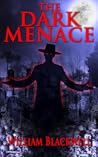
Noah Janzen’s life starts to split at the edges the moment his nights stop behaving like nights. They blur into something he can’t quite name—something perched on that thin, breathless line between a sleep disorder and… whatever waits past that line. Shapes flicker in the corners of his vision, shadows that shouldn’t move but somehow do. And every episode leaves a deeper mark, fear settling into him like a weight he can’t shake. You feel it too—that sharp, buzzing dread that curls up in your chest and refuses to be reasoned with.

When Noah finally turns to a sleep specialist—strange, brilliant, and not at all what he expected—the whole story tilts into territory that’s unsettling in the most believable way. The kind of mystery that makes you glance at the dark corners of your room before turning off the light. Every answer they uncover just makes the ground a little less steady, pulling you closer to Noah’s unraveling until you’re breathing in rhythm with his panic.

The Dark Menace is the sort of book you crack open way too late at night and instantly regret—but only because you’ll lie awake afterward, staring into the dark, wondering why it suddenly feels different. Even when you close the back cover, it doesn’t really let go. It lingers. It leaves fingerprints. Highly recommended.

View all my reviews
Friday, October 24, 2025

Happiness-Based Mindfulness by Sara Spowart

Happiness-Based MindfulnessHappiness-Based Mindfulness by Sara Spowart
My rating: 5 of 5 stars

A Practical Path to Emotional Mastery...

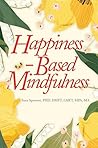
In Happiness-Based Mindfulness, Dr. Sara Spowart offers something pretty rare—a way to see our emotions not as things we need to fix, but as doorways to something deeper. Building on her earlier book You Are Love: The Discovery of Happiness, she's put together something that's both practical and beautiful: a psychoeducational program that doesn't feel like a textbook, but more like talking things through with someone who really gets it.

The centerpiece is her "Emotion Chart" and five zones of feeling—from the stormy Red Zone all the way up to the bright, open Yellow Zone. It's basically a map for your inner world, helping you not just figure out where you are emotionally, but how to move through it with purpose.

What sets this book apart is how it brings together the clinical stuff with something more soulful. Spowart doesn't just pull from psychology and mindfulness—she adds something gentler, something rooted in love. She shows how actually sitting with our pain, really looking at it, can open us up to compassion and strength we didn't realize we had. And she doesn't just leave you with ideas—her guided meditations, trauma-informed exercises, and workshop formats give you real, usable tools, whether you're reading for yourself, working with clients, or guiding others.

At its heart, Happiness-Based Mindfulness isn't just about managing your feelings. It's about coming home to yourself. Spowart writes with warmth and openness, like she's genuinely inviting everyone in. If you're tired of just reacting to life and you're ready to live from a place of awareness, empathy, and quiet joy—this book feels like a good place to start.

View all my reviews

Wednesday, October 22, 2025

Reflections by Phillip McClendon

ReflectionsReflections by Phillip McClendon
My rating: 5 of 5 stars

Wisdom for the Everyday Journey...

Reflections is one of those devotional books that feels like sitting down with a wise friend over coffee. Phillip McClendon has poured years of pastoral work and Sunday morning wisdom into these pages, organizing daily encouragements by month—each one touching on faith, family, relationships, and what it means to live with real purpose.

What makes this book special is how McClendon weaves everything together. Personal stories, biblical truth, and everyday examples all flow naturally into one another. He'll move from marriage and parenting to patriotism and gratitude without missing a beat, speaking to wherever you are in life. It never feels preachy—rather, it feels like you're listening to someone who's been there before and wants to share what he's learned.

The reflections on integrity, hope, and God's faithfulness during hard times really stand out. McClendon has this gift for taking something like Jim Croce's "Time in a Bottle" or the ancient story of Polycarp's martyrdom and making it resonate with what you're facing today. And beyond the inspiration, there's actual practical wisdom here—ways to strengthen your family, habits to deepen your spiritual life, things you can actually do.

The monthly setup might feel a bit choppy if you're the type who likes to read straight through, but McClendon gets that. He actually encourages you to skip around, find what speaks to you. It makes the book work beautifully whether you're reading a page each morning or turning to it when life throws you something difficult.

He wrote this for his grandchildren, and you can feel that heart in every entry—a grandfather wanting to pass down what matters most. Reflections is honest, accessible, and genuinely helpful for anyone looking to grow spiritually while navigating real life.

View all my reviews