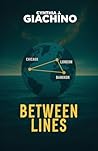
 Between Lines by Cynthia J. Giachino
My rating: 5 of 5 stars
A Gripping Mystery Thriller about Friendship, Fraud, and the Fight for Justice...
“Between Lines” by Cynthia J. Giachino is an engaging, socially conscious novel that blends personal narrative, suspense, and education about modern scams and human trafficking into a character-driven story that feels both timely and heartfelt. It reads like a hybrid of contemporary women’s fiction and issue-based thriller, anchored by an emotionally resonant core relationship between writer Irene and the distant, unseen figure of Ricco.
At its center, the book follows Irene, a midlife author whose dream of seeing her book succeed pulls her into a web of predatory publishing and film “opportunities,” leaving her financially and emotionally devastated before she slowly uncovers the scale of the fraud. Her friendship circle—calm, poised Betty and the bold ex-military Stella—becomes the emotional and practical backbone of her attempt to claw her way back, seek justice, and respond to a disturbing intuition that one of the “scammers,” Ricco, may himself be a victim trapped in a cyber-scam labor camp.
Thematically, the book tackles trust, shame, resilience, and identity, as well as the gray space between victim and perpetrator when people are coerced into crime. The narrative opens out from Irene’s living room to an international canvas—London, Southeast Asia, and the Mekong region—exploring pig‑butchering scams, cyber fraud compounds, and forced labor, while still keeping the focus on human relationships and the cost of survival. Book-club questions at the end explicitly foreground themes like good vs evil, courage, friendship, and self‑discovery, underscoring the author’s intention that readers reflect, not just be entertained.
Giachino’s strongest asset is her cast. Irene is written with vulnerability and self‑awareness; she feels ordinary in the best sense—hopeful, lonely, sometimes naïve—and her mix of guilt, humiliation, and determination after losing tens of thousands of dollars is painfully believable. Betty and Stella serve as complementary foils: Betty offers gentle stability and social grace, while Stella storms through scenes with military decisiveness, black leather, service dog Blizzard, and a near-comic refusal to accept arbitrary rules.
On the other side of the screen, Ricco (later revealed as Harris) is a compelling example of moral conflict under duress: a literature‑loving young man pressed into scamming elderly couples and aspiring writers to fund a militia, all while clinging to scraps of humanity through emails, whispered muttering, and a hidden cell phone strapped to his leg. Secondary figures—Maya, Gaffer, Dog, Edge, Ammara, and Maureen—add layers of found family, mentorship, and global perspective, especially once the story shifts toward rescue and extraction. The relationships are often idealized but emotionally satisfying; readers who enjoy loyal “team” dynamics and chosen-family arcs will find a lot to appreciate.
The book is structured in short, cinematic chapters that alternate between Irene’s world and Ricco’s, then expand to include Gaffer’s team and the wider investigative and rescue effort. This back‑and‑forth keeps the pace brisk: domestic scenes of email sorting, coffee, and card games are intercut with scenes of overheated compounds, guards, and high‑stakes extractions under fire. The voice is accessible and conversational, with frequent dialogue and interior monologue; it often feels like listening to a friend recount an extraordinary experience rather than reading a detached thriller.
Stylistically, the prose leans more toward clarity than literary experimentation. Expository passages where characters explain concepts like pig-butchering scams, cryptocurrency laundering, and cyber camps are direct and didactic, reflecting the author’s background in education and her desire to inform. At times this instructional impulse slightly slows the narrative or makes subtext explicit (for example, explaining trauma responses or global fraud figures in dialogue), but for readers new to these topics, it adds real value and context.
Where “Between Lines” succeeds most is in translating abstract headlines—scams, cryptocurrency fraud, trafficking—into lived experience and emotional stakes. Irene’s unease at being "pig butchered," her challenges in trusting her intuition, and her dependence on peer validation reflect the sentiments of several scam victims, invoking empathy rather than disdain. Ricco's chapters show how educated, well-meaning young adults can be duped into abroad "jobs," only to wake up in camps where every email is a crime and a plea for survival.
The novel also offers a hopeful throughline: friendship, intergenerational support, and international cooperation can produce real change, even if imperfect and risky. By the time the narrative reaches rescue, reunion in London, and tentative new beginnings—therapy, new work at archives, Amber’s return to pediatric nursing—the book has earned its optimism without denying ongoing trauma.
“Between Lines” will particularly appeal to readers who enjoy contemporary, character‑driven fiction with strong female friendships and a clear moral compass. Book clubs interested in discussing scams, digital trust, human trafficking, and midlife reinvention; the included discussion questions are thoughtful and ready-made for group use. Also, readers who enjoy narratives in which ordinary people confront global concerns while focusing on relationships, healing, and human behavior rather than procedural complexities will not be disappointed.
This is a compelling and accessible novel that intertwines suspense with empathy, and education with storytelling, leaving readers both informed and emotionally touched by the real human repercussions of modern internet fraud. Highly recommended.
View all my reviews
No comments:
Post a Comment